Protecting Mirantis k0rdent Virtualization & KubeVirt Workloads the Right Way
The Rise of Self-Service in Kubernetes & Virtualization
As enterprises modernize infrastructure, the shift toward self-service virtualization on Kubernetes is accelerating. Platforms such as Mirantis k0rdent AI and k0rdent Enterprise feature KubeVirt-based virtualization, enabling organizations to deliver on-demand infrastructure while maintaining governance controls.
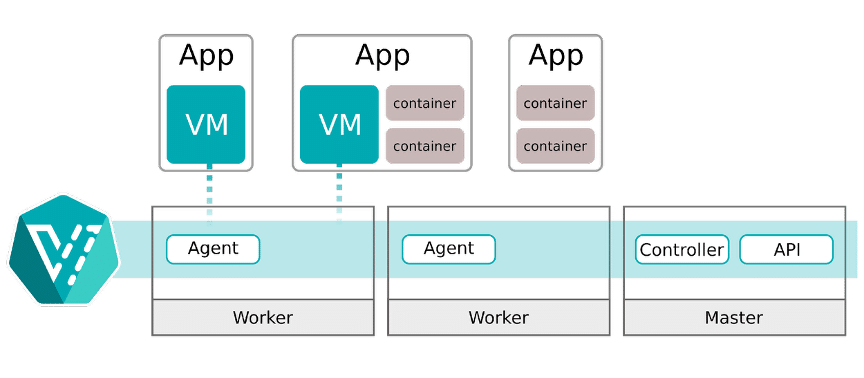
Mirantis k0rdent Virtualization lets organizations run containers and virtual machines on Kubernetes side-by-side, declaratively and at scale, deployed on bare metal, in the cloud, or at the edge, unified by a composable control plane and a web-based operations UI. It bridges traditional virtualization with containerization, so organizations can adopt cloud-native practices for new applications while continuing to run VM-based workloads that remain critical to the business.
Modern platform teams face a common set of pressures: developers need on-demand environments, VMs must be provisionable inside Kubernetes, and IT tickets need to shrink without sacrificing policy enforcement. Provisioning is the easy part. Recovery is what separates operationally mature teams from the rest. Self-service without data protection is incomplete.
CloudCasa + Mirantis k0rdent: Extending Self-Service to Data Protection
CloudCasa by Catalogic provides backup, disaster recovery, and migration for cloud-native environments. It runs as a fully managed SaaS platform or as a self-hosted deployment for organizations that require full control over their data protection infrastructure.
With CloudCasa listed in the k0rdent catalog (https://catalog.k0rdent.io), organizations can extend self-service beyond provisioning into full lifecycle resilience. CloudCasa delivers unified backup, recovery, and disaster recovery for Mirantis Kubernetes Engine (MKE) and Mirantis k0rdent Virtualization environments, protecting both Kubernetes-native and virtual machine workloads for users running hybrid, edge, or multi-cloud deployments.
Key capabilities include:
- Platform-admin deployable backup-as-a-service
- Developer-driven workload protection
- Full support for Mirantis k0rdent Virtualization (KubeVirt-based) workloads
- Cross-cluster restore
- Policy-driven automation and governance
Use Case: Self-Service VM Backup & Restore
Mirantis k0rdent Virtualization extends Kubernetes by adding the VirtualMachine resource type through the Kubernetes CRDs API, so VirtualMachine resources are managed alongside all other Kubernetes resources. CloudCasa protects VirtualMachine CRDs, PVCs, storage snapshots, namespaces, and cluster metadata across these environments.
A typical self-service scenario runs as follows: a developer deploys an approved VM workload from the k0rdent AI or k0rdent Enterprise catalog; a protection policy is applied through CloudCasa; and if recovery is needed, the restore targets the same or an alternate namespace or cluster. CloudCasa also supports file-level recovery, so users can browse and download individual files from virtual machine disks without restoring the full VM.
Role-Based Backup Governance
In Mirantis k0rdent AI or Enterprise deployments, CloudCasa adds RBAC integration, namespace-scoped protection, multi-cluster visibility, and policy-driven automation. Administrators can provide self-service backup and restore capabilities to users in Namespace as a Service (NaaS) environments, with granular recovery of individual resources and file-level restore from persistent volumes through a file browser.
Mirantis k0rdent Enterprise enforces policies centrally using RBAC, signed templates, and SBOMs for software supply chain integrity. CloudCasa extends that control into the data protection layer, so backup policies are governed with the same rigor as the workloads they cover.
Business Impact
For platform architects and infrastructure leads, the practical outcomes are: fewer dependencies on legacy VM backup tools, a simpler protection architecture, lower operational overhead, and faster environment recovery.
CloudCasa handles granular and cluster-level recovery across cross-account, cross-cluster, and cross-cloud scenarios, covering the hybrid, multi-cloud, and distributed topologies that Mirantis k0rdent is built to run.
Wrapping Up
Self-service infrastructure only delivers its full value when recovery is as straightforward as deployment. Mirantis k0rdent gives platform teams the provisioning controls, governance, and open architecture to run VMs and containers at scale. CloudCasa adds the data protection layer that makes that infrastructure operationally complete, covering backups, restores, and disaster recovery without requiring a separate toolchain or legacy backup product.
For organizations moving away from proprietary virtualization platforms, the combination means one fewer reason to delay the transition. Workloads are protected from day one, policies follow the workload across clusters, and recovery is testable and repeatable. To get started, find CloudCasa in the k0rdent catalog at https://catalog.k0rdent.io, or visit cloudcasa.io/partners/partner-mirantis-kubernetes-engine-and-k0rdent for platform-specific deployment details.